You are not the first person to look at the Caribbean and wonder if the “owning” part is real – or if it comes with hidden strings.
Belize is different in the ways that matter to North American buyers. You can hold real title, you can buy in your own name (or an entity if you prefer), and you can use your property as a lifestyle play, a long-term hold, or a short-term rental. The trade-off is that you need to buy like an adult – with the right due diligence, the right professional help, and a clear understanding of what you are purchasing.
Can foreigners buy property in Belize?
Yes. Foreigners can buy property in Belize and enjoy the same property rights as Belizean citizens in most situations. There is no blanket “foreigner ban” on ownership, and there is no requirement to have residency to purchase.
In practical terms, that means you can purchase fee-simple title (the closest equivalent to full ownership in the US and Canada), record the transfer, and hold the asset long term. For many buyers, the bigger question is not “can I,” but “what exactly am I buying, and how do I protect myself while I buy it?”
What ownership looks like (and what it doesn’t)
If you’re coming from the US or Canada, you want clarity on two things: title and control.
Belize offers several forms of land tenure, but most foreign buyers focus on fee simple. Fee simple ownership generally gives you the right to use, develop, sell, or pass the property to heirs, subject to local laws and any private restrictions that run with the land.
Those private restrictions are where the real differences show up. In unplanned areas, you may be buying next to anything, with no consistent standards on setbacks, height, noise, or aesthetics. In a well-planned community, building standards can protect the thing you are paying for: long-term value and livability.
The real “it depends”: location, access, and water
Foreign buyers tend to fall in love with a listing photo, then find out later that access is seasonal, utilities are improvised, or the “waterfront” is a mangrove edge with no practical boating.
Belize has extraordinary coastal geography, but not all waterfront is created equal. If you care about boating, pay attention to protection from surge and wind, canal depth and width, and whether your route is reliably navigable. If you care about convenience, confirm drive times to an international airport and the condition of the roads you’ll use in the rainy season.
This is also where safe-harbor positioning matters. A naturally protected location can be the difference between a calm, usable waterfront lifestyle and a property you only enjoy when the weather cooperates.
The buying process, simplified
The process is straightforward, but you should expect it to feel different than buying back home. Belize is English-speaking and uses a familiar legal system, yet the rhythm is local.
Typically, a purchase moves from an accepted offer to a formal agreement, then into due diligence and title review, and finally to closing and registration. The essential step is making sure the seller can convey clean title and that what you believe you are buying is exactly what will be transferred.
If you want the cleanest experience, treat your attorney as non-negotiable. A good Belize real estate attorney will verify title, check for liens and encumbrances, confirm boundaries, and manage the closing mechanics so you are not improvising across borders.
Due diligence: what protects you (and what doesn’t)
In Belize, your risk is rarely “the country.” Your risk is the specific parcel, the specific seller, and the quality of documentation.
Title search and verification is the heart of the deal. You want confirmation that the title exists, that it is correctly recorded, and that it can be transferred free of surprises.
A survey matters too, especially near water. Boundaries, easements, and setbacks can materially change what you can build. If you plan to build a home, dock, or seawall, you should understand any environmental or development constraints early, not after you own the lot.
And if you are buying inside a community, read the building standards and rules like an investor. Restrictions can feel limiting until you’ve watched uncontrolled neighboring development weaken resale values. The right standards are less about telling you “no” and more about protecting the neighborhood you are buying into.
Costs and taxes: the part people overcomplicate
Belize is often described as investor-friendly because carrying costs are typically low compared to many US coastal markets.
Property taxes in Belize are generally modest, and Belize does not impose a capital gains tax in the way many buyers expect. That said, your total cost to buy will include closing-related fees, legal work, and the practical costs of setting up ownership the way you want it.
The smarter way to think about costs is not just “how cheap is it to hold,” but “how predictable is my downside?” Predictability comes from clean title, reliable access, infrastructure planning, and community standards that support long-term demand.
Residency: do you need it?
You do not need residency to purchase property in Belize.
Some buyers pursue residency later for lifestyle reasons, tax planning, or simply because Belize becomes home. Others keep it simple – a second home they use part of the year and rent when they’re away. Ownership and residency are separate decisions, and you can move at your own pace.
Buying to build vs. buying a finished home
Belize is a place where building can be deeply rewarding – and where timelines can expand if you don’t plan well.
Buying a finished home can reduce complexity because utilities, access, and construction details are already proven. But buying a homesite can be the higher-upside play if the community is planned well, the lots are properly sized, and the waterfront is truly usable.
If you’re building, confirm practical inputs early: power, water, drainage, road access, and internet options. Then look at the “soft” factors that become hard problems later: contractor availability, material lead times, and the quality of oversight you will have when you’re not in-country.
Many foreign buyers prefer communities that can recommend architects and contractors who already understand local conditions. It reduces friction, but it also reduces costly learning curves.
Can you rent it out as a foreign owner?
In many cases, yes. Belize is tourism-driven, and short-term rentals can be a meaningful part of the ownership equation.
The difference is whether your specific property and community allow rentals and whether the location supports consistent guest demand. A gorgeous home that is difficult to access or lacks nearby attractions will rent differently than a property positioned for convenience and experience.
If rental income matters to you, think beyond nightly rates. Look at seasonality, property management realities, maintenance in a marine environment, and the guest experience from arrival to departure.
The biggest mistake: buying a view instead of buying a plan
A single lot can look perfect and still be a weak long-term asset if everything around it is uncertain.
Master planning changes that. When a community is designed from the start – with infrastructure, gated enclaves, commercial elements, and consistent building standards – you’re not just buying land. You’re buying into an ecosystem that supports resale demand.
This is why serious buyers ask about canal width, lot size, protection from open water, and the long-term vision for amenities and neighborhood buildout. Scarcity is real in the Caribbean, but the right kind of scarcity is controlled: limited releases, cohesive standards, and a location that stays desirable because it functions as well as it photographs.
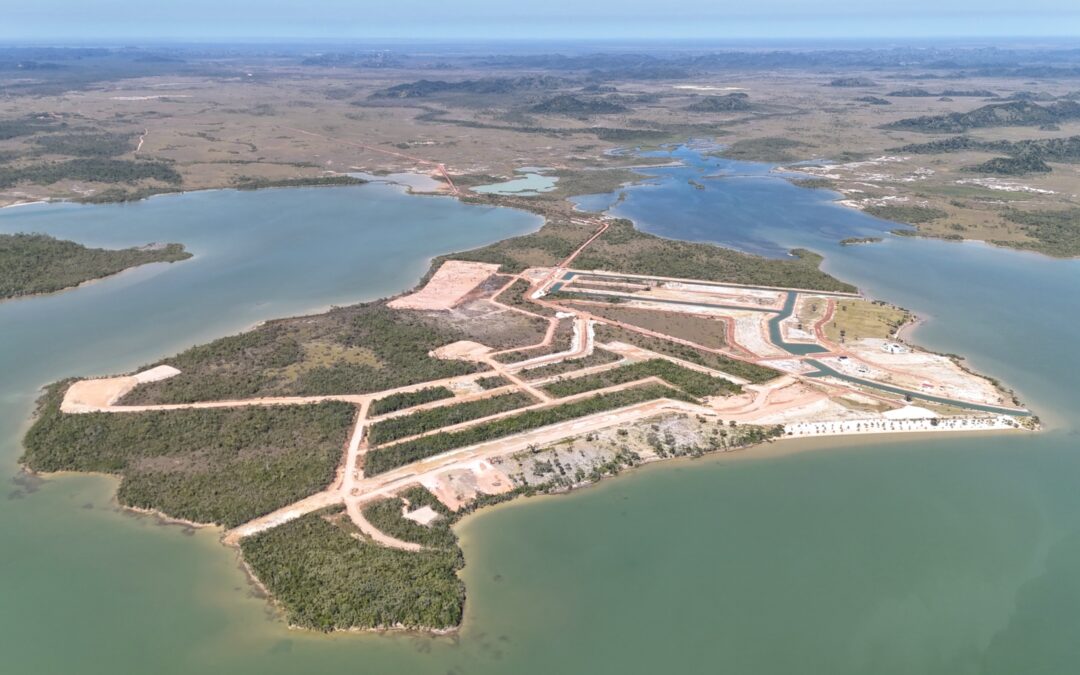
If you want a clear example of that approach, Coconut Point Belize offers direct-waterfront homesites inside a secure, master-planned Caribbean lifestyle community set within a nature sanctuary – with oversized canal-front and bayfront lots, protected boating conditions, and building standards designed to protect value as the community expands.
Practical guidance before you commit
You don’t need to become an expert in Belizean real estate. You just need to be disciplined.
Work with a qualified Belize attorney from day one, not after you’ve emotionally “claimed” the property. Verify title and boundaries, and be clear about access, utilities, and development rules. If you’re buying waterfront, confirm what “waterfront” means operationally: can you dock, can you navigate, and will the water behave the way you want it to behave.
And be honest about your outcome. A retirement home, a second home, and a rental investment can all be the same property – but they don’t have to be. The best purchases are the ones where the land, the plan, and your timeline agree with each other.
The quiet truth is that Belize rewards decisive buyers who do clean due diligence and move when the right parcel shows up – because the best waterfront isn’t reproduced, it’s secured.


