You can feel it the first time you step off a plane in Belize – the air is warmer, the pace is slower, and the horizon looks like it has more room in it.
But the moment you start looking at waterfront property, the daydream gets practical. Not all “waterfront” is created equal. Some lots are beautiful but exposed. Some are affordable but hard to reach. Some sit in areas where long-term value is a question mark because the surrounding development is uncontrolled.
If you’re shopping belize second home waterfront lots, the smartest move is to choose with both sides of your brain – the part that wants morning coffee by the water and the part that wants resale strength, build clarity, and a plan you can trust.
What “waterfront” really means in Belize
In Belize, waterfront can mean Caribbean Sea frontage, lagoon frontage, river frontage, or canal-front inside a planned community. Each one comes with trade-offs.
Sea frontage is the classic postcard view, but it’s also where weather and wave action do their work. Depending on the exact location, you may face higher build requirements, more aggressive corrosion, and a different conversation about docks and shoreline protection.
Lagoon and bay frontage can give you breathtaking sunsets and calmer water, but you’ll want to understand depth, seasonal changes, and what kind of boating lifestyle that frontage supports.
Canal-front lots often deliver the best day-to-day boating convenience because you get a protected slip and consistent access, especially when canal design is wide enough for real navigation and not just decorative water. The difference between a narrow canal and a purpose-built one shows up the first time you try to turn a boat.
The key is to define your version of waterfront. Is it the view? The dock? The ability to fish from your backyard? The plan to keep a boat for weeks at a time without worrying about exposure? Your answer should steer the search.
Why second-home buyers are choosing Belize
A second home has to earn its keep. Even if you never rent it, it needs to feel easy – easy to get to, easy to own, easy to maintain, and easy to leave behind when you fly home.
Belize checks boxes that matter to US and Canadian buyers because English is the official language, the country has a long history of welcoming foreign ownership, and the lifestyle is equal parts Caribbean and comfortably familiar.
Then there’s the investor lens. Belize is often discussed for its low property taxes and the fact that it does not charge capital gains tax. Taxes aren’t the only reason to buy, but they can change the math when you compare Belize to other coastal markets where carrying costs creep up year after year.
Tourism demand is another part of the equation. A second home that can also operate as a short-term rental gives you flexibility – use it when you want it, generate income when you don’t. The practical question becomes whether the location and community rules support that plan.
The make-or-break factors for Belize second home waterfront lots
Plenty of people fall in love with a photo. Experienced buyers fall in love with fundamentals.
Protected water is more valuable than dramatic water
A safe harbor is not a marketing phrase. It’s a lifestyle upgrade.
If your dream includes a boat, protected conditions can be the difference between using it weekly and leaving it parked because the route out feels like a gamble. Even if you’re not a boater today, a protected waterfront lot tends to be easier to market later because it appeals to both lifestyle buyers and practical buyers.
Think about how you’ll feel during storm season. Some waterfront looks perfect until the weather shifts. The most desirable second-home lots often sit where nature provides protection without sacrificing access.
Access matters more than you think
A second home you can reach easily gets used more. That’s not philosophy, it’s behavior.
Look at drive time to the international airport, road quality, and how predictable that route is. Belize continues to improve infrastructure, and the new Coastal Highway has changed the feel of certain destinations by compressing travel time. For owners, that means more long weekends, fewer travel headaches, and a stronger rental story for guests who want to land and arrive without an all-day trek.
Community planning protects resale
Belize has areas with a frontier feel, and that can be part of the charm. But if you’re buying a second home waterfront lot as a long-term asset, your neighboring development matters.
Master planning is the quiet force behind resale confidence. When building standards exist, your view is less likely to be compromised by an out-of-place structure. When roads, drainage, and common areas are planned from the start, the community ages better. That translates to demand when you decide to sell.
The trade-off is that standards can limit certain design choices. For many buyers, that’s a feature, not a bug – you still get creative freedom, but you don’t get value erosion.
Oversized lots change the entire experience
Waterfront density is real. A narrow lot can feel like you bought a view and gave up privacy.
Wider homesites give you flexibility for home design, outdoor living, and dock layout. They also create a calmer neighborhood feel – fewer close-in sightlines, more breathing room, and a stronger sense of “this is mine.”
If you’re comparing options, pay attention to lot width, setback requirements, and how those translate to the home you actually want to build.
Building, retiring, or renting: choose a lot that fits your outcome
Second-home buyers often start with one plan and evolve into another. That’s normal.
You might buy for vacations now, then spend longer stretches later. Or you might think you’ll keep it private and later decide rental income makes sense. The right waterfront lot supports multiple chapters.
If you plan to build soon, focus on build readiness and the ease of coordinating a project from abroad. A community that can point you toward trusted architects and contractors reduces friction, especially if you’re balancing the project with a career back home.
If retirement is the goal, prioritize daily livability. Protected boating and nature access are wonderful, but so are predictable roads, a sense of security, and a neighborhood that feels cohesive rather than scattered.
If investment and short-term rentals are part of the plan, make sure rentals are permitted and encouraged, not tolerated. You want a place where vacation guests make sense, where the location supports tourism demand, and where community planning doesn’t turn into constant rule changes.
The difference between “a lot” and a lifestyle community
A raw lot on the water can be a great buy, but it also puts every decision on your shoulders – infrastructure, security, neighborhood character, and long-term upkeep.
A secure lifestyle community shifts that burden. When the development is designed around boating access, walkable neighborhoods, and a shared vision, your second home becomes easier to own and easier to enjoy. You get the romance of Belize with fewer unknowns.
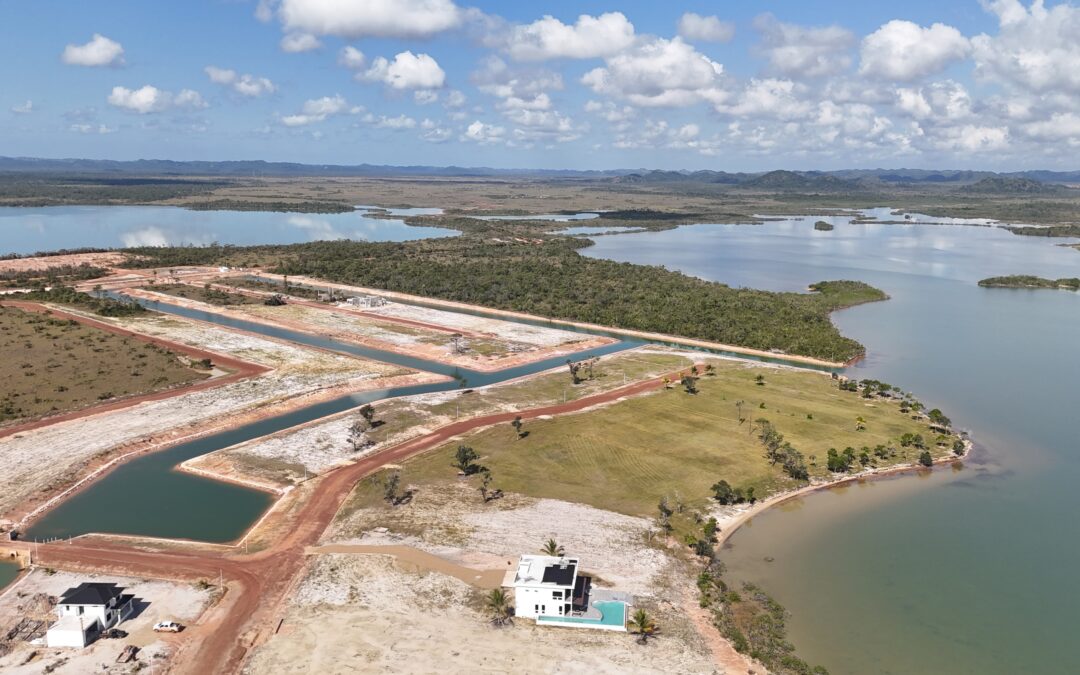
At Coconut Point Belize, for example, every homesite is direct-waterfront inside a 220-acre inland island connected by a land bridge and set within a 9,000-acre nature sanctuary. The canals are designed at 75 feet wide, which is the kind of detail that matters if you want real boating functionality. It’s also positioned as a naturally protected safe-harbor location – a practical advantage that tends to become more valuable, not less, over time.
That combination – protected water, oversized waterfront lots, balanced building standards, and rental permissiveness – is why planned communities aren’t just a lifestyle choice. They can be a risk-management choice.
Questions to ask before you reserve a waterfront lot
This is where confident buying replaces hopeful buying.
Ask what “waterfront” means on that specific homesite. Is it open water, canal, lagoon, or bayfront? What are the water depths and how do they change seasonally?
Ask about dock rules and permitting expectations. Even if you don’t build a dock right away, you’ll want to know what’s realistic.
Ask how the community protects value. Are there building standards? Are they balanced enough to keep the neighborhood cohesive without turning your home into a cookie-cutter?
Ask about rental policy in plain English. Are short-term rentals allowed? Are there restrictions on frequency or management requirements?
Ask about infrastructure you won’t see in photos – road access, drainage planning, utilities, and how the development is phased. Phasing is not a negative. It’s often a sign of disciplined growth, but you should understand what’s completed now and what’s coming next.
Timing and scarcity are real in waterfront
Waterfront is finite, and the best-positioned lots are even more finite.
In Belize, you’ll notice that prime waterfront inside well-planned communities tends to move in phases. That’s not hype – it’s simply how developers release inventory responsibly, and it’s how buyers avoid overpaying later when the best locations are already spoken for.
If you’re serious about a second home, timing is part of the strategy. Buying earlier can mean better selection, while buying later can mean more finished amenities. Neither is universally right. It depends on whether your priority is choice, certainty, or immediacy.
A smarter way to picture your future here
Instead of asking, “Do I want Belize?” ask a better question: “What kind of Belize do I want?”
Do you want open-sea drama or protected-water calm? Do you want raw independence or a community with standards that keep the neighborhood beautiful? Do you want a second home that sleeps quietly until you arrive, or one that can earn while you’re away?
When the answers are clear, the right waterfront lot stops being a gamble and starts feeling inevitable – like you’re claiming a place that was always supposed to be yours.
If you’re going to choose one thing to be uncompromising about, make it this: pick a waterfront lot that supports your life the way you actually live it, not the way a brochure tells you to.


