You can buy a beautiful piece of Caribbean land at a tempting price and still end up owning years of uncertainty. That is the real tension in planned communities versus raw land. On paper, both can offer waterfront access, privacy, and long-term upside. In practice, they deliver very different buying experiences, holding costs, timelines, and resale outcomes.
For US and Canadian buyers looking at Belize or the wider Caribbean, the choice is rarely just about acreage. It is about whether you want a property that is ready to support the life or investment plan you have in mind, or whether you are willing to create that framework yourself. That distinction matters more than most first-time international buyers expect.
Planned communities versus raw land: what changes after closing
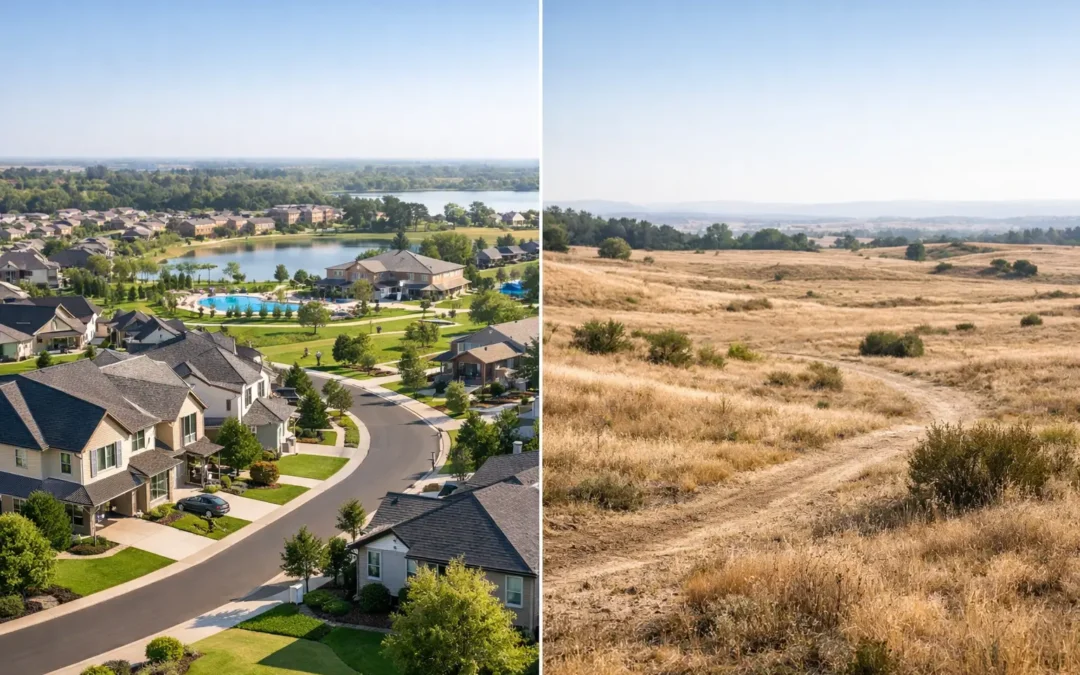
Raw land offers freedom. You are not stepping into a pre-shaped vision, and that appeals to buyers who want full control over site design and timing. If you find an exceptional location and have the patience, local knowledge, and budget to solve each development step independently, raw land can absolutely work.
But after closing, raw land often asks much more of the buyer. Access roads may be limited or unfinished. Utility planning can be unclear. Drainage, fill, shoreline considerations, permitting, and contractor coordination may fall entirely on your shoulders. Even if the land itself is well chosen, the path from ownership to enjoyment can be longer and more expensive than expected.
A planned community changes that equation. You are not only buying a lot. You are buying into a land plan, infrastructure strategy, design standards, and a surrounding environment intended to support livability and value over time. For many buyers, especially those purchasing from abroad, that reduces friction in a meaningful way.
The difference becomes even sharper when the property is meant to serve more than one purpose. If you hope to build a second home, retire there later, and use it as a vacation rental in the meantime, a community with roads, waterfront planning, rental-friendly rules, and a coordinated aesthetic is often easier to activate and easier to market later.
The hidden cost question
The headline price of raw land can look attractive because it strips the purchase down to the dirt itself. What it often does not include is the cost of making that land usable on your timeline. That may mean engineering, utility extension, land preparation, legal due diligence tied to access or boundaries, and the simple cost of time.
Time is not a small line item in Caribbean real estate. Delays affect construction budgets, rental timelines, and your own ability to enjoy the property. If you are buying with a five- to ten-year horizon, those early years matter. They are either spent moving toward your intended use or spent solving foundational issues that a more established community may have already addressed.
Planned communities typically price in more certainty. That can make the upfront number look higher than a raw parcel nearby, but the comparison is rarely apples to apples. Roads, water access planning, lot layouts, community vision, and value-protecting standards all have economic value. They also influence what future buyers will pay when it is your turn to sell.
This is where many investors shift their thinking. The lowest entry price is not always the strongest value. In a market driven by lifestyle demand and limited premium waterfront inventory, predictability carries a premium for good reason.
Lifestyle freedom sounds different in each model
Buyers are often told that raw land means freedom, while planned communities mean restrictions. That is true up to a point, but it leaves out the larger reality.
Raw land gives you maximum autonomy, yet it can also leave you isolated. If neighboring parcels develop without cohesion, views can change, setbacks can vary, and the overall character of the area may become uneven. That affects not only your enjoyment, but also your property’s long-term marketability.
A well-conceived planned community asks you to accept balanced building standards in exchange for a more predictable environment. That is not the same as sacrificing individuality. It means there is a framework that helps preserve waterfront access, visual appeal, privacy, and a level of quality across the community.
For many second-home and retirement buyers, that trade feels worth making. They are not trying to build in a vacuum. They are trying to own in a place that will still feel desirable, polished, and protected years from now.
Planned communities versus raw land for investors
If your purchase has an income component, planned communities versus raw land becomes a much more practical conversation. Rental performance depends on more than the view. Guests care about arrival experience, road quality, security, boating access, neighborhood appearance, and the confidence that the home sits in a destination rather than an unfinished pocket of possibility.
Raw land may eventually support a strong rental home, but it often takes longer to reach that stage. You must build not only the residence, but also much of the surrounding guest confidence. In contrast, a planned waterfront community can create immediate context for the property. Buyers and renters understand what the setting is, how it functions, and why it holds appeal.
That context matters for resale as well. Future buyers tend to pay more decisively when they can see the logic of the community around the lot. They are buying into a proven concept, not just a location on a map.
In Belize, this is especially relevant because demand is shaped by both lifestyle migration and vacation use. A property that supports personal enjoyment and short-term rental potential sits in a stronger position than one that requires extensive development guesswork before it can perform.
Infrastructure, access, and the reality of distance
Many buyers romanticize remoteness at first. Then they start thinking about airport transfers, contractor logistics, groceries, emergency access, marina conditions, and how guests or family members will actually use the property.
Raw land can be compelling precisely because it feels undiscovered. But undiscovered often means under-served. If the goal is total solitude and you are comfortable building around limitations, that may be acceptable. If the goal is easy ownership, recurring use, and broad resale appeal, access and infrastructure become central.
That is why master-planned waterfront developments continue to draw serious attention. They offer the feeling of privacy and nature immersion while removing some of the rough edges that make ownership from afar difficult. Protected boating conditions, oversized lots, clear access routes, and an organized build path are not small perks. They are part of what makes a property truly usable.
In the right setting, a planned community can deliver the Caribbean most buyers actually want – calm, beautiful, investment-worthy, and easy enough to enjoy without turning every decision into a project.
Which buyer is better suited to raw land?
Raw land tends to fit buyers with a very specific profile. They often have prior development experience, strong local contacts, a flexible timeline, and a genuine desire to shape everything from the ground up. They are usually comfortable with ambiguity and less concerned with near-term usability.
That approach can pay off, especially if they secure a rare parcel in a path of growth. But it is not the simple bargain it is sometimes marketed to be. It is a custom undertaking, and custom undertakings usually cost more in energy, time, and oversight than expected.
For buyers who live abroad, want direct waterfront enjoyment, and care about preserving future value, a planned community is often the more intelligent path. It provides a degree of certainty that is hard to replicate independently.
At Coconut Point Belize, that is exactly the appeal: a rare waterfront setting where nature, boating access, rental flexibility, and community standards work together rather than compete. You are not being asked to imagine what the property could become in isolation. You are stepping into a setting already designed to support the way people actually want to live, build, and invest in the Caribbean.
The better question is not which is cheaper
The better question is which purchase structure best supports your end goal. If you want maximum control and accept a longer, less predictable road, raw land may be the right fit. If you want a beautiful asset that is easier to build on, easier to enjoy, and often easier to resell, a planned community usually has the advantage.
In Caribbean real estate, the smartest purchases are rarely the ones that look cheapest at first glance. They are the ones that make ownership feel clear from day one and keep that clarity intact as the years unfold. Choose the land that supports the life you want, not just the price you see today.


