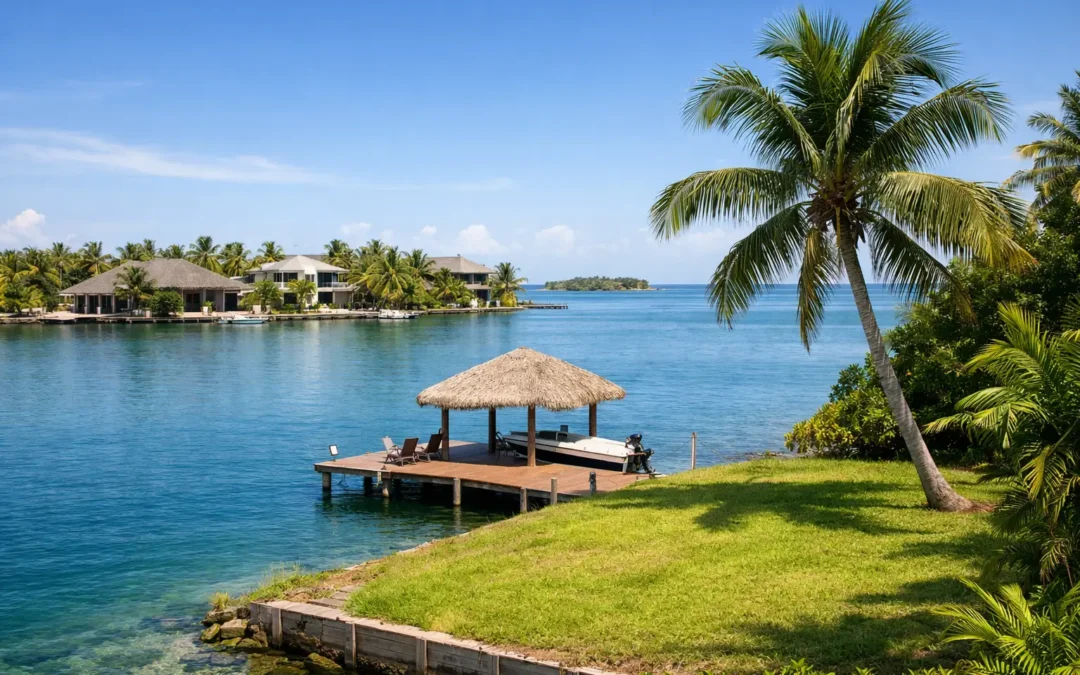
A buyer looks at two Caribbean properties and sees the same word on both listings – waterfront. One sits on an exposed stretch with little planning around it. The other is inside a protected, master-planned setting with controlled standards, boating access, and limited direct-waterfront inventory. If you want a real waterfront lot appreciation example Belize investors can learn from, that difference is where the story starts.
Waterfront land does not appreciate simply because it touches water. It appreciates when scarcity, usability, buyer demand, and long-term marketability line up. In Belize, where coastal property continues to attract North American second-home buyers, retirees, and vacation rental investors, the most meaningful gains tend to happen in locations that offer both lifestyle appeal and structural reasons for future demand.
What a waterfront lot appreciation example in Belize really shows
Appreciation is often discussed too casually. A lot that rises in value over time is not just benefiting from a broad market upswing. In the best cases, it is also benefiting from constraints that make it harder to replicate. Direct waterfront is finite. Protected waterfront is even more limited. Waterfront within a cohesive community plan is rarer still.
That is why a strong waterfront lot appreciation example in Belize should never be reduced to a single purchase price and resale price. You have to look at what changed between those two moments. Did road access improve? Did the area gain more visibility with foreign buyers? Did the community add amenities or progress through sold-out phases? Did the original pricing leave room for the market to catch up? Those are the forces that often create the most attractive spread between early entry and later value.
Picture a buyer who acquires a direct-waterfront homesite during an early phase release in a secure coastal development. At the time of purchase, the lot is priced to attract early adopters. A few years later, several things happen. More buyers discover the area. The first phase sells out. New phases release at higher prices. Building activity creates visual proof of momentum. Infrastructure feels less theoretical and more established. Suddenly, the same buyer is no longer holding an idea. They are holding a scarce piece of a proven waterfront community.
That is where appreciation becomes more than wishful thinking.
A simple waterfront lot appreciation example Belize buyers can model
Let’s keep the math straightforward. Assume an early buyer purchases a waterfront lot in Belize for $149,000 in an initial release. Over the next five years, the community advances, inventory tightens, and comparable waterfront lots in later phases are offered at $189,000 to $215,000, depending on position, frontage, and water access.
Even before a resale occurs, the market is already signaling appreciation through replacement cost. If a similar lot now costs $199,000, the original buyer has seen an implied gain of $50,000, or roughly 33.6 percent. If later scarcity and completed homes push resale demand above current developer pricing, the upside can move further.
Of course, it depends on the exact lot, timing, and overall market conditions. A premium bayfront homesite may outperform a less dramatic canal-front parcel. A lot with superior orientation, better docking convenience, or stronger privacy may command more. Appreciation is never perfectly uniform.
Still, this example shows the basic mechanism. Early pricing, followed by phased sell-through and increasing scarcity, can create meaningful value growth without requiring speculative assumptions. The more distinctive the waterfront product, the more persuasive that price progression becomes.
Why some Belize waterfront lots appreciate faster than others
Not all waterfront is equal, and buyers who understand that usually make better decisions.
The first factor is protection. Waterfront that offers calm boating conditions and shelter from harsher exposure tends to carry a different kind of appeal than lots in areas where access or use can feel limited by weather. Buyers shopping for a Caribbean home are not only imagining the view. They are imagining how often they will actually use the water.
The second factor is lot quality. Oversized homesites, generous frontage, and thoughtful canal widths can support stronger long-term values because they improve both livability and build flexibility. A lot that accommodates a more elegant home design, outdoor entertaining space, and practical boating features is easier to market later.
The third factor is planning discipline. This matters more than many buyers realize. Communities with balanced building standards often protect value better because neighboring properties are less likely to undermine the visual quality of the area. That consistency can help preserve the premium feel buyers are paying for in the first place.
Then there is simple scarcity. In Belize, true direct-waterfront inventory with easy access, privacy, and a compelling natural setting is not endless. As those opportunities get absorbed, pricing pressure tends to build.
The Belize advantage behind the numbers
Belize has a specific appeal for US and Canadian buyers because it combines Caribbean lifestyle with practical ownership advantages. English is the official language, foreign ownership is straightforward, and the market continues to draw buyers seeking both personal use and investment potential.
But appreciation is not just about country-level appeal. It is about whether a specific property sits in the path of sustained demand. The strongest waterfront opportunities tend to share a few characteristics: they are accessible without feeling crowded, they offer a clear use case for owners and renters, and they fit what the next buyer is already looking for.
That next buyer is often not a full-time expatriate with unlimited flexibility. More commonly, it is someone who wants a winter home, a retirement plan, a rental-capable property, or an eventual relocation option. Properties that satisfy more than one of those goals tend to have broader resale demand.
That is one reason master-planned waterfront communities can stand out. They are not selling land alone. They are selling confidence around how the property can be enjoyed, built on, rented, and later resold.
Lifestyle value and appreciation often rise together
Some investors try to separate lifestyle from return. In Caribbean real estate, that can be a mistake.
The features that make a property enjoyable often support its value trajectory. Privacy matters. Protected water matters. Airport access matters. A secure setting matters. So does the ability to build a primary residence, create a retirement escape, or operate a vacation rental without fighting the framework of the community.
When a development gets those pieces right, appreciation has a stronger foundation because the buyer pool stays wider. A lot that appeals only to a narrow niche may still sell, but a lot that speaks to retirees, second-home owners, and rental investors at the same time usually has a better long-term market.
This is where communities like Coconut Point Belize become especially compelling. Direct-waterfront homesites inside a protected inland-island setting, surrounded by nature sanctuary acreage and supported by thoughtful standards, create a far more persuasive appreciation case than generic waterfront inventory. Add phased releases, rental permissiveness, oversized lots, and a safe-harbor environment, and the value proposition becomes unusually clear.
Trade-offs smart buyers should keep in mind
A serious appreciation discussion should include restraint.
First, raw land is not as liquid as publicly traded assets. If you need to sell quickly, timing may work against you. Waterfront property can command strong prices, but buyers still need time to evaluate, visit, and compare.
Second, appreciation is location-specific. Belize as a whole may attract more attention over time, but weak projects can still underperform. Poor access, thin planning, or compromised waterfront quality can limit upside.
Third, the best returns often go to buyers who enter before momentum is obvious. That means acting when the value is visible but not yet fully reflected in the market. Waiting for complete certainty usually means paying a later-phase price.
That is the balance many savvy buyers weigh. Early entry carries more dependence on execution, while later entry often reduces upside. In well-conceived communities, that gap can be where the most attractive appreciation occurs.
How to read a waterfront lot opportunity with an investor’s eye
When reviewing any Belize waterfront lot, ask a few practical questions. Is the waterfront genuinely usable, or mostly visual? Is the setting protected enough to support boating and long-term enjoyment? Are there community standards that help preserve neighboring value? Is inventory limited in a meaningful way? Can the property appeal to both an end user and a future renter or resale buyer?
Then look at pricing through a replacement lens. If you buy now, what would a comparable lot likely cost after the next release, the next stretch of infrastructure, or the next wave of buyer attention? Appreciation often starts there – not in fantasy projections, but in understanding what future buyers may have to pay for the same scarcity.
A strong waterfront lot appreciation example Belize buyers can trust is rarely flashy. It is grounded in simple truths. Waterfront is limited. Protected waterfront is rarer. Well-planned waterfront with lifestyle appeal and investor logic behind it is rarer still.
The buyers who tend to do best are the ones who recognize that value before everyone else does, while the water is still calm and the next phase has not yet been claimed.


