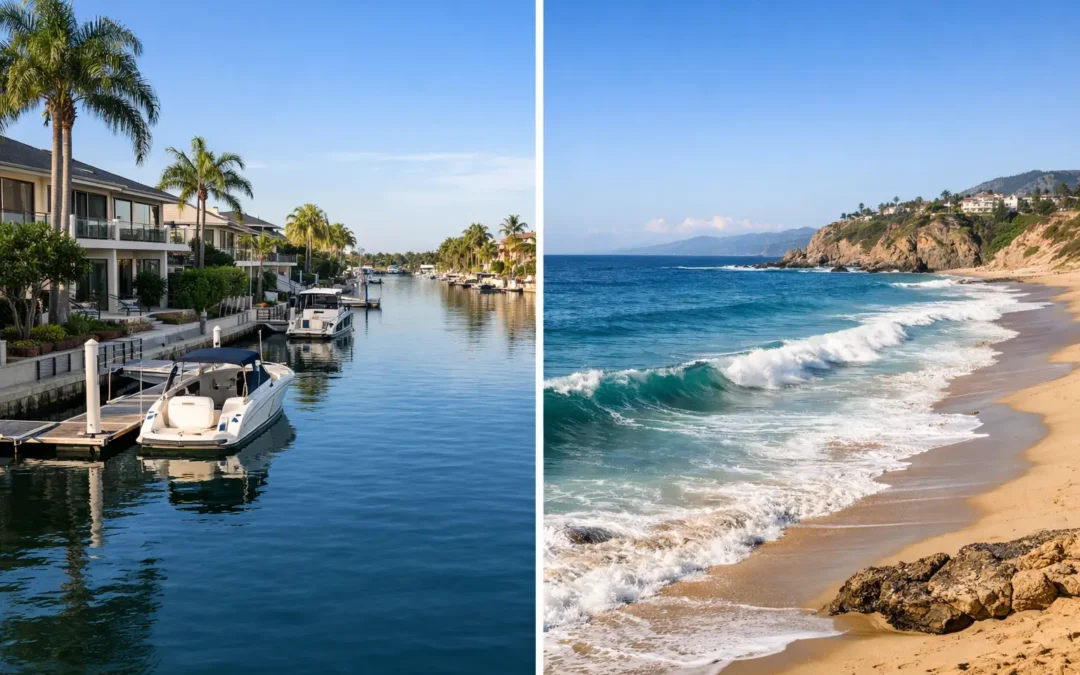
A waterfront address can look equally beautiful on paper, yet feel completely different once you own it. That is why canal frontage versus open coast is not a cosmetic choice. It shapes how you boat, how you build, how often you use the property, and how confidently you hold it as a long-term asset.
For buyers comparing Caribbean homesites, the wrong waterfront can turn a dream into extra maintenance, weather anxiety, or limited usability. The right one can give you calm access, stronger day-to-day enjoyment, and a property that stays attractive to future buyers and renters. The difference is not simply view versus view. It is exposure, protection, functionality, and livability.
Canal frontage versus open coast: what changes in real life
Open coast property usually delivers the dramatic postcard moment. You may have bigger horizons, direct exposure to sea breezes, and the kind of water view that feels cinematic from sunrise to sunset. For some buyers, that emotional pull is real and worth paying for.
But open coast also comes with full exposure to wind, wave action, salt, and shifting conditions. Depending on the location, docking can be harder, launching a boat can be less predictable, and shoreline protection may become part of the ownership equation. If you picture spontaneous boating, keeping a vessel close at hand, or enjoying a more sheltered day on the water, open coast can be more complicated than it first appears.
Canal frontage tends to offer a different kind of luxury. It is quieter, more controlled, and often more usable day to day. Instead of looking straight into open water energy, you live along a protected edge where docking, launching, and waterfront access can be far easier. For buyers who want their property to support real use rather than occasional admiration, that distinction matters.
The boating question is bigger than most buyers expect
Many waterfront buyers assume all direct-water properties work the same for boating. They do not. A lot may be on the water, but that does not automatically mean it gives you protected, convenient, low-stress access.
With open coast frontage, boating conditions can change quickly. That can affect dock design, vessel security, and whether you head out for a relaxed afternoon or decide it is not worth the trouble. Exposure is part of the appeal, but it is also part of the trade-off.
With canal frontage, the experience is often more practical. A protected canal system can reduce chop around your dock, simplify loading and unloading, and make day-to-day vessel use feel natural instead of occasional. If your vision includes fishing, cruising, kayaking, or simply keeping your boat behind your home, canal frontage may better support the lifestyle you are actually buying.
This is especially true in locations where canals connect to larger protected waters rather than ending in an isolated residential feature. In those cases, canal frontage is not a compromise. It can be the smarter expression of waterfront ownership.
Views matter, but usability matters longer
There is no point pretending the visual impact is identical. Open coast often wins the first impression. The broad water view can feel expansive and dramatic in a way canals usually do not try to match.
Yet buyers rarely live inside a first impression forever. Over time, the question becomes whether the property performs well for how you want to live. If you want a home that feels private, manageable, and consistently enjoyable across seasons, canal frontage has a strong case. The setting can feel intimate, elegant, and calm, especially when canals are generously designed and integrated into a larger waterfront master plan.
Oversized lots along wide canals can also create a premium sense of space. You still get direct waterfront living, but with a more sheltered relationship to the water. For many buyers, that balance feels less exposed and more refined.
Building and maintenance are part of the value equation
Waterfront ownership is emotional, but the smartest purchases are never based on emotion alone. Buildability and maintenance deserve close attention.
Open coast sites can present more variables. Wind exposure, salt air, wave action, and erosion risks can influence everything from design choices to materials, landscaping, and long-term upkeep. None of that means open coast is wrong. It means the romance should be measured against carrying costs and construction realities.
Canal frontage often gives builders a more controlled environment. Depending on the development, that can translate into clearer building standards, more predictable site planning, and a finished streetscape that supports long-term values. Buyers focused on retirement, a second home, or a vacation rental usually benefit from fewer unknowns.
In a thoughtfully planned community, canal lots can also create a stronger visual consistency. That matters more than many people expect. A beautiful home is valuable, but a beautiful surrounding community is what protects marketability over time.
Canal frontage versus open coast for rentals and resale
If part of your plan involves rental income or eventual resale, it helps to think like the next buyer before you purchase. Open coast can be highly attractive to a specific segment of the market, particularly buyers chasing panoramic views and a pure oceanfront identity.
But canal frontage can appeal to a broader range of practical users. Boaters, retirees, second-home owners, and vacation renters often respond well to protected water, easier access, and a more secure feel. A waterfront home that is easy to enjoy usually has a wider audience than one that is beautiful but less adaptable.
That is one reason master-planned canal-front communities can be so compelling. When short-term rentals are permitted, boating access is protected, and the overall neighborhood is designed for long-term quality, you are not just buying scenery. You are buying versatility.
Versatility tends to matter in real estate. A property that works for personal use, seasonal occupancy, retirement living, and income production has more than one path to value.
Why protected waterfront is gaining attention
Experienced buyers increasingly look past simple labels like oceanfront and bayfront and ask a better question: how protected is this waterfront, really?
That shift reflects a more mature view of Caribbean ownership. Buyers want beauty, of course, but they also want confidence. They want to know their dock is usable, their vessel is sheltered, their homesite sits within a setting that supports appreciation, and their day-to-day experience will feel as good in year five as it does on purchase day.
This is where protected canal frontage inside a secure, nature-rich community stands apart. In the right setting, it offers a rare blend of Caribbean escape and practical performance. You still get direct water access and a deeply immersive coastal lifestyle, but without the full exposure that can complicate ownership on the open coast.
That balance is a major part of the appeal at Coconut Point Belize, where oversized waterfront homesites along 75-foot-wide canals combine protected boating conditions with a naturally sheltered safe-harbor location. For buyers who want a property they can build, enjoy, rent, and hold with confidence, that is a meaningful distinction.
Which one is right for you?
If your top priority is the emotional power of an expansive horizon and you accept the trade-offs that come with greater exposure, open coast may still be the right fit. Some buyers want that full-edge relationship with the sea and would not trade it for anything more protected.
If your priority is everyday livability, calmer docking, easier boating access, more controlled building conditions, and a waterfront experience that feels elegant rather than exposed, canal frontage deserves serious attention. It often aligns better with how people actually use their property over time.
The best waterfront purchase is not the one that sounds most impressive in a listing. It is the one that supports your life with the least friction and the most upside. In the Caribbean, where weather, water access, and long-term maintenance can shape ownership more than buyers first expect, that is not a minor detail. It is the decision.
A great waterfront property should do more than look beautiful from the deck. It should make it easy to cast off in the morning, easy to come home in the afternoon, and easy to feel you chose the right edge of the water.


