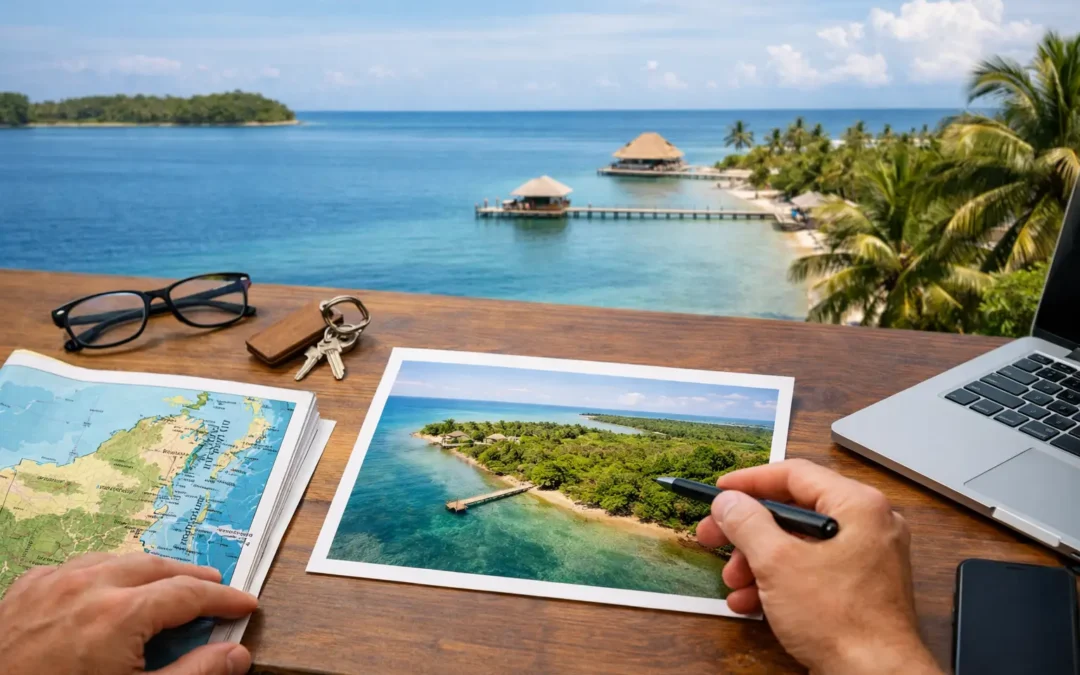
A postcard view is easy to fall for. A smart waterfront purchase takes more than that.
If you are researching how to buy waterfront land in Belize, the real question is not simply how to close on a lot. It is how to choose a property that protects your lifestyle, your capital, and your future options. In Belize, that means looking well beyond the waterline. You want clear title, practical access, strong resale logic, and a setting that still feels exceptional years from now.
Belize has a real advantage for US and Canadian buyers because foreigners can own property in their own name, and the market remains far more accessible than many other Caribbean destinations. But not all waterfront is equal. An exposed shoreline and a protected canal-front homesite may both be called waterfront, yet they offer very different boating conditions, building realities, and long-term appeal.
How to buy waterfront land in Belize without costly mistakes
The first step is defining what you actually want the land to do for you. Some buyers want a private retirement home where mornings begin with still water and a boat at the dock. Others want a second home that can also perform as a vacation rental. Some are buying primarily for appreciation, betting on a well-located community before full buildout drives the next wave of demand.
Those goals matter because they shape every decision after that. If rental income is part of the plan, you need to know whether short-term rentals are allowed. If boating is central to the lifestyle, protected water access matters more than a dramatic but exposed view. If long-term value is the priority, community standards, lot dimensions, and the quality of neighboring development become more important than a low headline price.
In other words, buying waterfront land in Belize is not just a land purchase. It is a location strategy.
Start with ownership, title, and closing costs
Belize is attractive because foreign buyers generally enjoy the same property ownership rights as locals. That simplicity is one reason the country remains on the radar for North American buyers who want a Caribbean foothold without unnecessary legal friction.
Still, you should never buy on scenery alone. Ask whether the property has clear title, whether there are easements or restrictions that affect access or use, and whether the roads, utilities, and drainage plans are established or only proposed. A legitimate transaction should also make the closing path easy to understand from the beginning. If the pricing looks attractive but the final costs remain vague, slow down.
This is where many buyers misread value. They focus on the lot price and ignore the full acquisition cost. Transfer tax, legal fees, and closing costs can materially change the math. A development that includes those expenses in the purchase price can create a meaningful advantage from day one because it lowers cash outlay and removes uncertainty.
The right question is not, “What does this lot cost?” It is, “What will I actually spend to own this property free and clear?”
Choose the right kind of waterfront
Waterfront sounds singular. It is not.
In Belize, one parcel may offer open-water exposure and broad views. Another may sit on a canal with calmer dockage and easier day-to-day boating. A bayfront homesite may deliver a dramatic sense of space. A canal-front lot may offer more practical protection for vessels and waterfront living.
That trade-off matters. Buyers often assume the most visually dramatic site is automatically the best investment. Sometimes it is. Sometimes a protected homesite in a thoughtfully planned waterfront community is the more durable choice because it supports boating, privacy, construction planning, and broader buyer demand.
Look closely at lot width, shoreline usability, water depth, and how the homesite interacts with weather. Oversized lots with generous waterfront frontage tend to support stronger design flexibility and better long-term marketability. They are simply easier to build on well, and easier to sell later.
Location matters more than romance
The dream is tropical. The decision should still be practical.
When considering how to buy waterfront land in Belize, think in layers. First is macro location. How far is the property from the international airport? How easy is the drive? Is the route dependable year-round? Buyers planning regular travel, family visits, or rental use should care a lot about this.
Second is micro location. Is the property inside a secure, cohesive community or isolated on a standalone tract? Is it surrounded by protected natural beauty or vulnerable to incompatible neighboring uses later on? A waterfront lot inside a master-planned setting often has a very different future than one in an unstructured area with no building standards.
That is one reason communities set within nature preserves or safe-harbor environments stand out. They deliver the feeling buyers want – privacy, calm water, wildlife, and a slower pace – while also solving practical concerns around protection, design consistency, and livability.
Building standards are not a drawback
Some buyers hear “building standards” and assume limitation. Experienced buyers hear value protection.
A community with balanced architectural guidelines is usually trying to prevent the exact issues that damage resale value over time: poor neighboring construction, inconsistent setbacks, neglected lots, and visual clutter. The point is not to make every home look the same. It is to preserve the quality of the overall environment.
If you plan to build a personal residence, those standards help protect the setting you are investing in. If you plan to rent the property, they support a more polished guest experience. If you plan to hold the lot for appreciation, they reduce the chance that the surrounding product undermines your exit later.
You should also ask how easy it is to move from land purchase to construction. The best developments do not leave you on your own after closing. They can point you toward trusted architects, builders, and local professionals so your timeline does not stall once you are ready to build.
Understand the income side before you buy
A beautiful homesite can still be the wrong purchase if it limits your earning potential.
For many North American buyers, the best waterfront property in Belize is one that keeps multiple paths open. You may build now, build later, retire there eventually, or use the property as a vacation rental in the meantime. Flexibility is part of the value.
That makes rental policy important. Some communities restrict short-term rentals or create enough friction that the income opportunity becomes weaker than expected. Others actively allow and support short-term stays, which can improve the economics for buyers who want a hybrid lifestyle-and-investment property.
Belize also gets attention from investors because of its tax profile, including low property taxes and no capital gains tax. That does not make every purchase a winner, but it does improve the backdrop for buyers thinking about long-term holds and eventual resale.
Buy into a trajectory, not just a phase
Early buyers in the right community often benefit from the simplest force in real estate: momentum.
If a development is being released in phases, ask what has already sold, what is currently available, and what is planned next. A sold-out first phase can be a strong signal. It suggests that the market has already validated the concept. Ongoing expansion, especially when it adds gated enclaves, commercial conveniences, or stronger lifestyle infrastructure, can support both daily enjoyment and future demand.
This is where scarcity matters. Prime waterfront is finite everywhere, and protected waterfront inside a thoughtfully designed Caribbean community is rarer still. Once the strongest lots are absorbed, later buyers may pay more for less choice.
At Coconut Point Belize, that appeal is especially clear. Buyers are not just selecting a lot. They are securing direct waterfront within a protected inland-island setting, surrounded by sanctuary land, with oversized homesites, rental flexibility, and pricing that includes transfer tax, stamp duty, and legal and closing costs – an unusually strong value position in the Caribbean market.
What to ask before you reserve a lot
Before committing, ask direct questions and expect direct answers. How wide is the waterfront? What are the building timelines, if any? Are utilities in place or scheduled? Can you keep a boat at your property? Are short-term rentals allowed? What exactly is included in the price?
You should also ask to understand the broader vision. A one-off parcel may be cheaper today, but a master-planned community with real standards, protected water, and a clear growth path can offer a better ownership experience and better long-term leverage.
The best waterfront purchases in Belize feel calm, simple, and obvious once the fundamentals line up. Not because they are impulsive, but because the property fits the life you want and the numbers you trust.
The water may be what gets your attention. The real win is finding a place where the view, the protection, and the upside all live on the same shoreline.


