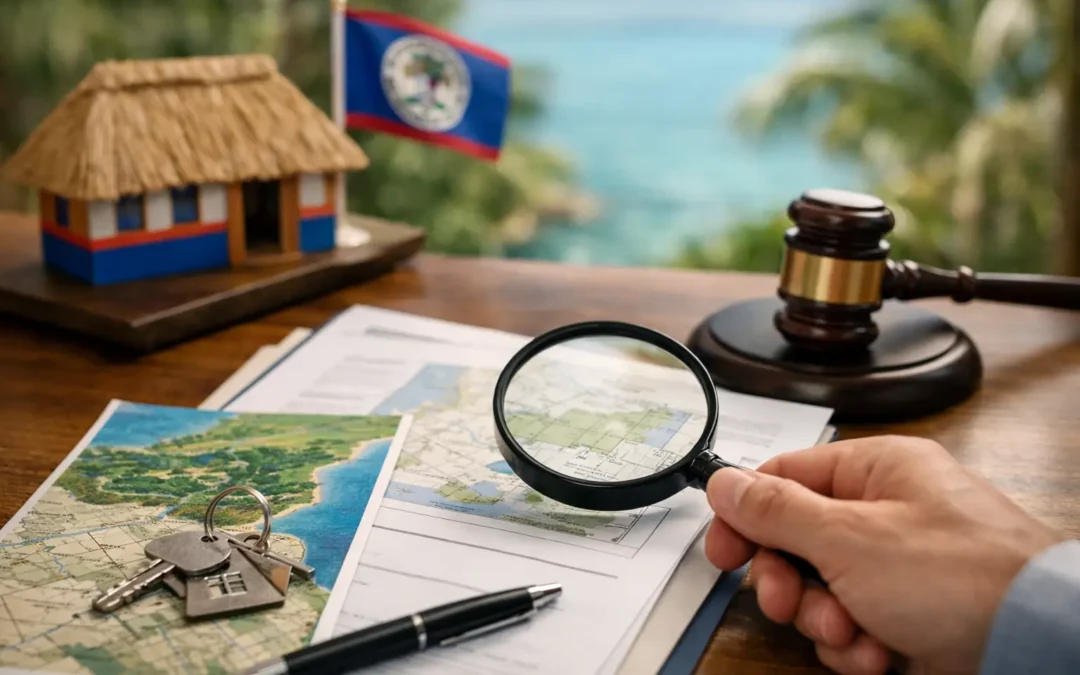
A waterfront lot in Belize can look perfect on paper – broad canal frontage, protected boating, easy access to the airport, and the kind of Caribbean setting that makes a second home feel inevitable. But before any buyer falls in love with the view, the file matters. The Belize land title search process is where smart purchases begin.
For US and Canadian buyers, this step is less about bureaucracy and more about clarity. You want to know who owns the land, whether there are liens or encumbrances, whether the parcel boundaries are properly recorded, and whether the seller can actually transfer clean title. In a market where lifestyle and appreciation can both be compelling, title work is what keeps the opportunity attractive instead of risky.
What the Belize land title search process is really checking
At its core, a title search confirms the legal status of a parcel before money changes hands. That sounds simple, but in Belize, it can involve different record systems depending on how the land is registered. Some property falls under the Land Registry system, while other parcels are recorded under the General Registry system. The process is similar in purpose, but the records you review and the way ownership history appears can differ.
A proper search usually aims to confirm current ownership, identify past transfers, check for mortgages, liens, cautions, court claims, rights of way, restrictive covenants, and any other issue that could affect your use or resale of the property. It should also align the legal description of the land with survey records so the parcel being sold is the parcel you think you are buying.
This is where international buyers need to resist one common mistake – assuming a beautiful brochure or a signed seller statement replaces legal verification. It does not. In Belize, as anywhere, the land records tell the real story.
How the Belize land title search process usually works
Most buyers begin after identifying a specific parcel and agreeing in principle on price and terms. Your attorney or closing professional then requests the relevant land records. If the property is under the Land Registry system, the title search often centers on the Land Certificate and the parcel register. If the property is under the General Registry system, the search may involve tracing deeds back through prior conveyances to establish a clear chain of title.
That difference matters. Land Registry property is often considered more straightforward because ownership and registered interests are centralized in a more modern system. General Registry property can still be perfectly valid, but the review may take more time and require closer attention to historical transfers and supporting documents.
After the ownership documents are pulled, the next step is reviewing encumbrances. A mortgage recorded against the land does not always mean a deal should stop, but it does mean the release process must be clear before or at closing. Rights of way are also not automatically a problem. In some cases they are necessary and expected, especially for access or infrastructure. The question is whether they are disclosed, documented, and acceptable for your intended use.
Survey review follows close behind. The parcel dimensions, lot lines, and plan references should match what is being marketed and sold. If there is any uncertainty about boundaries, especially on larger tracts or waterfront parcels, buyers may choose an updated survey or site verification. That extra step can feel cautious, but on premium property it is often money well spent.
Why this matters more for waterfront and investment buyers
Not all land carries the same practical risk. Waterfront property has a stronger emotional pull, but it also deserves tighter due diligence because access, frontage, easements, drainage, and development standards all influence value. If your goal is to build a retirement home, hold for appreciation, or create a vacation rental, title clarity is not just a legal concern. It affects financing, insurability, resale confidence, and future buyer demand.
This is especially true in master-planned communities, where the upside can be exceptional if the development is properly structured and documented. Buyers are not only purchasing a lot. They are buying into a framework – roads, canal systems, community standards, access points, utility planning, and a shared long-term vision. A title search should fit within that broader due diligence picture.
In well-conceived projects, this can actually make the process feel more controlled. When infrastructure, planning, and closing procedures are already organized, buyers often face fewer surprises than they would with isolated raw land. That said, every parcel still deserves its own file review. A polished development presentation should support due diligence, not replace it.
Common issues a title search can uncover
Most title searches do not reveal dramatic legal trouble, but they often uncover details that need to be cleaned up before closing. A prior mortgage may still appear in the records even if the seller says it has been paid. A family transfer may have happened informally but not been recorded correctly. A legal description might be incomplete, or a survey reference may not match the parcel being marketed.
There are also situations where land has good title but the buyer’s intended use does not align with restrictions attached to the property. This is where the search should go beyond ownership and look at practical use rights. Can you build the size of home you want? Are there setback requirements? Are there community covenants? Is short-term rental use allowed if that is part of your investment plan?
That last point matters because a low-friction purchase is only part of the equation. The best Belize property opportunities are the ones that remain easy to use, easy to enjoy, and easy to resell.
This is one reason many buyers gravitate toward organized communities where the purchase path is already designed to be clear. At Coconut Point Belize, for example, the appeal is not only the protected waterfront setting and oversized homesites. It is also the fact that buyers are stepping into a thoughtfully planned environment where long-term value protection matters. Even then, prudent buyers still make title review part of the process.
Questions buyers should ask during the process
A title search should leave you with confidence, not vague reassurance. Ask whether the property is in Land Registry or General Registry. Ask who the current registered owner is and whether the seller has full authority to transfer title. Ask whether there are any recorded mortgages, liens, cautions, easements, or court matters affecting the parcel.
You should also ask whether the legal description matches the survey plan and whether there are any use restrictions relevant to your goals. If you intend to build soon, verify that the parcel can support that plan. If you intend to rent the property after building, confirm that the community rules and land use structure support that outcome.
These are not skeptical questions. They are the questions of a disciplined buyer protecting both lifestyle and capital.
How long it takes and what can slow it down
Timing depends on the registry system, the quality of the seller’s documents, and whether issues are discovered. Some title checks move quickly. Others take longer when historical deed tracing is needed or when a discharge, correction, or missing filing must be completed.
International buyers sometimes expect a rigid timeline, but Belize transactions can be more fluid than a standard suburban closing in the US. That is not automatically a red flag. It simply means due diligence should be handled early, with room for legal follow-up if something requires clarification. The right mindset is not speed at any cost. It is clean title at closing.
For buyers pursuing a Caribbean waterfront property that they plan to enjoy for years, a brief delay is usually far less costly than inheriting a problem that should have been caught.
The real goal of title due diligence
The Belize land title search process is ultimately about preserving the promise of the purchase. When buyers picture mornings on the water, protected boating, a retirement home in the sun, or a rental asset positioned for appreciation, those outcomes all depend on one quiet truth – the ownership file must be solid.
A good title search does not make a property exciting. It makes it dependable. And in a market where the right waterfront parcel can offer both Caribbean beauty and serious long-term upside, that kind of dependability is exactly what allows opportunity to feel rare for the right reasons.


