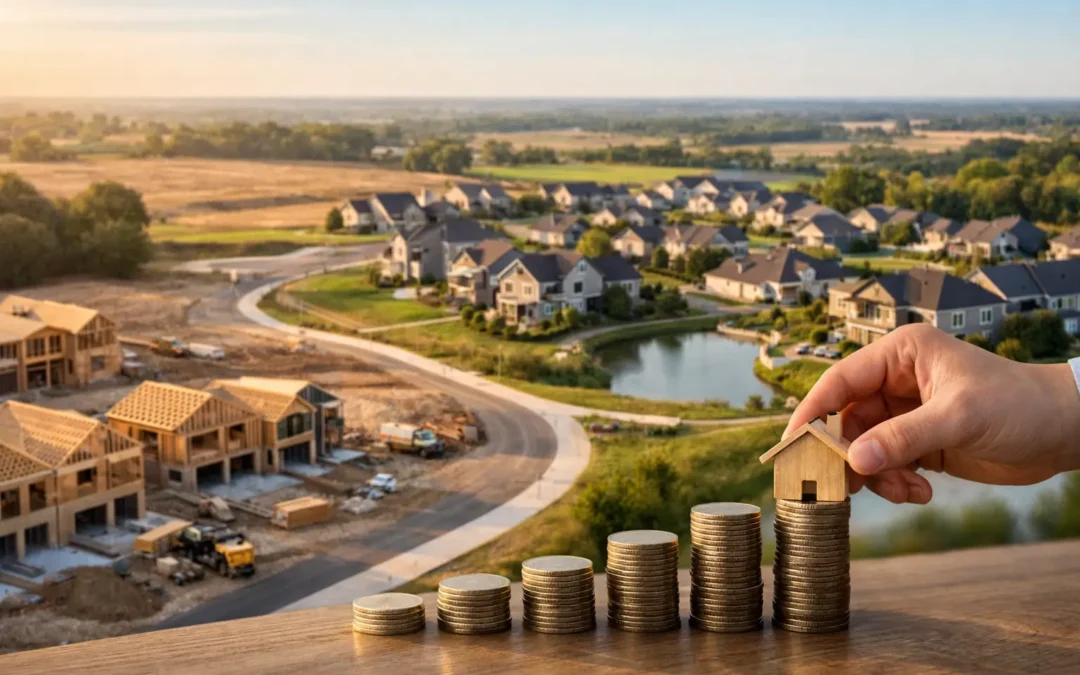
A waterfront community does not become more valuable by accident. It happens when land is released with discipline, when infrastructure arrives in the right order, and when each new phase makes the whole place more desirable than it was before. That is the real answer to how phased communities appreciate value – not through hype, but through a plan buyers can see taking shape.
For second-home buyers, retirees, and investors, this matters because appreciation is rarely driven by scenery alone. Beautiful water, tropical climate, and privacy create demand, but long-term value tends to follow communities that control growth instead of dumping every lot onto the market at once. In Caribbean real estate especially, the difference between a promising project and a lasting one often comes down to how intelligently the phases are structured.
Why phased communities appreciate value over time
A phased community is developed and released in stages rather than all at once. That sounds simple, but the impact is significant. Early buyers often enter at a lower basis, while later buyers pay for a more mature environment with more visible progress, stronger amenities, and clearer market proof.
This creates a healthy value ladder. As roads, utilities, landscaping, boating access, security features, and shared spaces come online, the community becomes easier to understand and easier to trust. Buyers are not just purchasing raw land. They are buying into a place that is steadily becoming more complete, more usable, and more marketable.
Scarcity also plays a role. When a phase sells through and the next release comes at a higher price, the market receives a very clear signal. Demand has been proven. Available inventory has narrowed. Future buyers must compete for a more limited set of opportunities, often with better visibility into what the finished community will offer.
That does not mean every phased development appreciates in the same way. If the planning is weak or the later phases dilute the character of the project, values can stall. Appreciation depends on disciplined execution, not just the word phased in a brochure.
The mechanics behind how phased communities appreciate value
The strongest phased communities create momentum through three connected forces: price progression, amenity growth, and buyer confidence.
Price progression is the most visible. Early releases are often priced to attract foundational buyers and build traction. Once a phase is substantially sold, the next phase typically enters at a higher level, reflecting stronger demand and more advanced development. Buyers in earlier phases benefit when the market establishes a new benchmark above their original purchase price.
Amenity growth is what makes those higher benchmarks feel justified rather than arbitrary. A community with completed roads, maintained canals, secure entry points, architectural cohesion, and expanding lifestyle features simply commands more attention than land with only a concept behind it. Each delivered improvement reduces uncertainty and expands the buyer pool.
Buyer confidence may be the most underrated force of all. In international real estate, confidence affects value almost as much as location. When buyers can see sold phases, active building, defined standards, and a community plan that is actually being followed, hesitation drops. That confidence supports stronger resale demand because future buyers are stepping into a proven story rather than a speculative one.
Early phases reward vision, later phases reward certainty
There is always a trade-off. Early buyers generally capture the best pricing and the greatest upside if the community performs as planned. They are buying before the market has fully recognized the opportunity. That can be powerful in a waterfront project where land is finite and the best positions are naturally limited.
Later buyers typically pay more, but they buy with more certainty. They can see neighboring homes, gauge rental potential, understand traffic flow, and assess whether the developer has delivered on the original promise. For many buyers, especially those purchasing from the US or Canada, that added visibility is worth the premium.
This is one reason phased communities appeal to such a broad audience. Investors may focus on entering early to maximize appreciation. Lifestyle buyers may prefer a later phase that offers a more established environment from day one. Both can make sense. It depends on whether your priority is lowest entry cost or highest immediate clarity.
Building standards are a major value driver
One of the clearest examples of how phased communities appreciate value is the role of building standards. In a premium waterfront setting, value is not protected by water views alone. It is protected by what gets built next door, across the canal, and throughout the wider neighborhood.
Balanced standards help preserve visual quality, privacy, drainage, setbacks, and overall marketability. They keep the community from becoming a patchwork of incompatible structures that undermine the original vision. This matters even more in places where buyers want flexibility – primary residence, retirement home, or vacation rental – because different use cases still need to coexist attractively.
The best standards do not suffocate owners. They create enough freedom for personal expression while maintaining enough consistency to support resale values. That balance is where sophisticated buyers tend to focus. Too little control can damage value. Too much can weaken demand. The sweet spot supports both individuality and long-term appreciation.
Waterfront scarcity makes phasing more powerful
In land developments, phasing is useful. In direct-waterfront developments, it becomes even more compelling because the underlying asset is harder to replicate. Waterfront inventory is finite. Protected boating conditions are finite. Oversized lots with meaningful canal frontage are finite. Once those positions are absorbed, they cannot simply be created again nearby.
That scarcity gives each phase more weight. When a waterfront phase sells out, the next release is not just another batch of lots. It is a smaller remaining portion of a very limited opportunity. Buyers understand that intuitively, especially in the Caribbean, where many projects offer water views but far fewer offer true direct-waterfront ownership with practical boating access and protected conditions.
This is where master planning matters. If every homesite benefits from the water-oriented identity of the community, demand tends to stay broader and stronger. If only a handful of lots carry the premium character while the rest feel disconnected, value growth can become uneven.
Amenities and commercial elements lift resale appeal
Appreciation is not only about what an owner enjoys. It is also about what the next buyer wants badly enough to pay for. That is why later additions such as gated residential enclaves, neighborhood services, and carefully integrated commercial elements can have an outsized impact on resale demand.
A community becomes more livable when daily needs are easier to meet. It becomes more investable when short-term renters find it more convenient and more memorable. It becomes more credible when buyers can picture not only a beautiful lot, but an entire lifestyle functioning around it.
Still, there is a line to respect. Too much commercial intensity can erode the privacy and calm that drew buyers in the first place. The most successful communities add usefulness without losing the sense of escape. In a nature-rich waterfront environment, that balance is especially important.
Why rental flexibility can strengthen appreciation
Communities that allow and support short-term rentals often enjoy a wider demand base. That does not guarantee higher values, but it can improve liquidity and make ownership more attractive to buyers who want optionality. A homesite or finished home that can serve as a private retreat, a retirement base, and a vacation rental tends to appeal to more people than one with only a single use case.
This wider appeal can support appreciation over time, especially in tourism-driven markets. Buyers are not just evaluating beauty. They are evaluating the ability to offset costs, generate income, and adapt the property to changing life stages.
Of course, rental permissiveness works best when paired with standards and planning. Without those controls, rental activity can become disruptive. With them, it can strengthen the economic case for ownership while preserving the quality of the community.
A phased waterfront community needs more than a good map
Sophisticated buyers should look beyond a phase chart and ask harder questions. Is infrastructure being delivered in a visible sequence? Are prices increasing because demand is real, or because the developer simply says they will? Do the standards protect value without limiting enjoyment? Does the location offer practical access, security, and a reason people will want to own there years from now?
That is where communities such as Coconut Point Belize stand apart. In a protected safe-harbor setting surrounded by a vast nature sanctuary, with direct-waterfront homesites, oversized canal frontage, rental-friendly ownership, and a clear phased rollout, the appreciation story is tied to both lifestyle and logic. Buyers are not being asked to imagine value out of thin air. They can measure the ingredients that support it.
The most compelling phased communities do something rare. They let you buy a quieter, slower, more beautiful life while still making a disciplined real estate decision. If you can find that combination early enough, value has room to grow long before the last phase is spoken for.


