A waterfront lot can look like a simple land purchase on paper. In reality, if your goal is rental income, the lot itself shapes almost everything – what you can build, how guests experience the property, how easily it rents, and how well it holds value over time. That is the real answer to how vacation rental lots work: the land is not just where the house sits. It is the foundation of the investment model.
For buyers considering Belize, that distinction matters. Not every lot is equally suited for short-term rentals, and not every development is designed to support an owner who wants to build, enjoy the home personally, and rent it when not in residence. The strongest opportunities usually come from communities where rental use is allowed, access is practical, the setting is memorable, and the surrounding plan protects the guest experience as much as the owner’s upside.
How vacation rental lots work as an investment
A vacation rental lot is a parcel of land purchased with a future income-producing home in mind. You are not buying a finished rental property on day one. You are buying the right to build one in a location that can attract paying guests.
That sounds straightforward, but the value of the lot depends on several layers working together. First, the lot must sit in a destination people already want to visit. Second, local rules and community standards must permit short-term rentals. Third, the physical characteristics of the lot must support the kind of home travelers will pay a premium to book.
This is why lot investing for vacation rentals is different from buying random land and hoping it appreciates. The best rental lots are part lifestyle purchase, part development opportunity, and part long-range yield strategy. If the lot is in a secure, well-planned waterfront setting with protected boating access, oversized homesites, and consistent building standards, the finished home is easier to position in the market and easier to resell later.
What makes a lot “rental-ready”
When people imagine vacation rental income, they often focus on bedrooms, a pool, or interior finishes. Guests do care about those things, but the lot determines whether the property has the kind of setting that drives nightly rates in the first place.
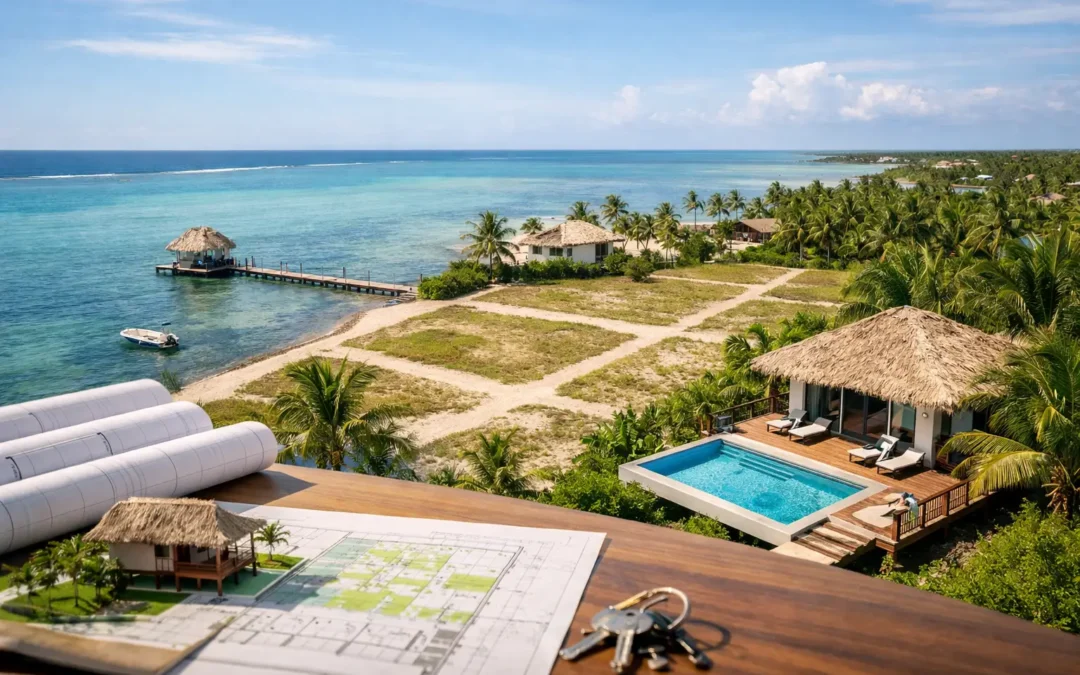
Waterfront is the clearest example. A canal-front or bayfront homesite can create the sort of arrival experience that separates a forgettable rental from one that books well across high season and shoulder season. Views, boat access, breezes, privacy, and orientation all start with the land. If the lot is oversized, you also gain more design flexibility for outdoor living, parking, docks, entertaining areas, and the spacing that affluent travelers expect.
Access matters just as much. A beautiful home can underperform if reaching it feels difficult or uncertain. Buyers should look closely at travel time from the international airport, road quality, and whether the location feels remote in the right way rather than isolated in the wrong way. There is a difference.
Then there is community design. In a master-planned waterfront development, standards around setbacks, home quality, use, and lot spacing can quietly do a great deal of work for you. They help protect the look and feel of the neighborhood, reduce the risk of incompatible neighboring builds, and support the kind of polished environment that renters notice even if they never mention it in a review.
The role of short-term rental permissions
One of the most important details in understanding how vacation rental lots work is whether the community and local framework actually support rentals. Some buyers assume they can build first and sort out usage later. That can be a costly mistake.
Before purchasing, you want clarity on whether short-term rentals are allowed, whether there are any design or operational requirements, and whether the development welcomes owners who plan to rent. A rental-friendly community is usually better positioned than one that merely tolerates it. That is because the entire ownership experience tends to be more aligned with investor needs, from road access and community presentation to marketability and resale.
This is one area where a thoughtfully planned Belize waterfront development can stand apart. If the project is intentionally designed to support owners who want to build a second home, retire in the future, or generate rental income in the meantime, your exit options are wider. You are not locked into a single use case.
Building the right home for the lot
A vacation rental lot only becomes an income-producing asset after the home is designed and built. That is where many first-time buyers need a more realistic lens. The lot may be exceptional, but the return depends on building a home that fits both the site and the market.
The smartest approach is usually not to overbuild or underbuild. A home that is too modest for a premium waterfront setting may leave rate potential on the table. A home that is too customized or too expensive for the surrounding market may take longer to earn back its cost. Good planning lives in the middle.
For rental performance, outdoor living often matters as much as indoor square footage. Covered terraces, water views, private docks, breezy gathering areas, and a layout that works for families or couples can all influence occupancy and pricing. In the Caribbean, guests are paying for the feeling of being there. The architecture should serve that feeling.
This is also why many buyers prefer communities that can recommend architects and contractors familiar with the area. Building abroad feels much more manageable when the process is already part of the development’s rhythm rather than something you have to invent on your own.
Why location within the community matters
Not all lots inside the same development perform equally as vacation rental opportunities. Even in a strong project, some homesites will be more attractive than others depending on canal width, view corridor, privacy, boating convenience, and orientation.
A wider canal frontage, for example, can enhance both aesthetics and usability. A protected harbor environment may appeal to boating buyers and renters who want calm, reliable water access rather than exposed conditions. Proximity to future amenities can help as well, though there is always a trade-off. Closer can mean more convenience, while a more tucked-away lot may deliver greater privacy and a more exclusive feel.
This is where a buyer should think beyond the purchase price alone. The better lot may cost more upfront but support a stronger finished product, better guest appeal, and more resilient resale demand. In a phased development, that difference can become even more pronounced as the community matures.
How appreciation and rental income work together
Many buyers approach vacation rental lots as if they must choose between cash flow and appreciation. In reality, the most attractive properties often blend both.
Rental income can help offset carrying costs and ownership expenses while the larger value story unfolds through infrastructure improvements, community buildout, and increasing scarcity of premium waterfront inventory. If the development has a cohesive plan, secure setting, and balanced standards, each completed home and each new phase can strengthen the appeal of the whole community.
That said, income is rarely identical from one property to the next. Seasonality, home design, management quality, marketing, and guest demand all matter. The lot gives you the platform, but execution still counts. Buyers should view rental performance as a business attached to real estate, not passive magic.
For many investors, Belize is especially appealing because the lifestyle demand is real, the waterfront product is limited, and the ownership profile can be efficient from a tax and holding-cost standpoint. When you add direct-waterfront land in a protected, master-planned setting, the long-term equation becomes more compelling.
How vacation rental lots work in a master-planned community
The strongest version of this model often appears inside a well-conceived waterfront development where every homesite benefits from the broader vision. That includes the road network, water access, gated sections, future commercial elements, and building standards that preserve a cohesive sense of place.
In practical terms, that means your individual lot is supported by more than its own boundaries. The community itself contributes to rental desirability. Guests are not only renting a house. They are choosing an environment that feels secure, scenic, and intentional.
This is a major reason discerning buyers look closely at projects such as Coconut Point Belize. A secure inland island community with canal-front and bayfront homesites, naturally protected boating conditions, oversized lots, and rental-friendly positioning gives owners more than a beautiful address. It creates a framework for building a home that can serve as a personal retreat today and a compelling vacation rental asset over time.
What buyers should ask before purchasing
Before moving forward, ask direct questions about rental permissions, building timelines, lot dimensions, infrastructure delivery, access, recommended builders, and whether the community’s standards are designed to protect long-term value. Also ask the more strategic question: what kind of guest is this property likely to attract once built?
That answer helps connect the lot to the eventual business plan. A couple’s retreat, a boating-focused rental, a multigenerational family home, and a retirement property with part-time rental use may all belong in the same community, but they do not need the same lot or the same design.
The most successful buyers start with the end use in mind. When the setting is right, the standards are right, and the waterfront experience is strong, a lot becomes far more than land. It becomes a rare chance to create something people will travel for, return to, and remember long after checkout.


